Shabbos & Zmanim
How Shabbos Times Work: Candle Lighting, Havdalah and Zmanim Made Simple
Why candle lighting is 18 minutes before sunset, why Jerusalem lights earlier, how Havdalah time is set, and what each daily zman means, in plain English.
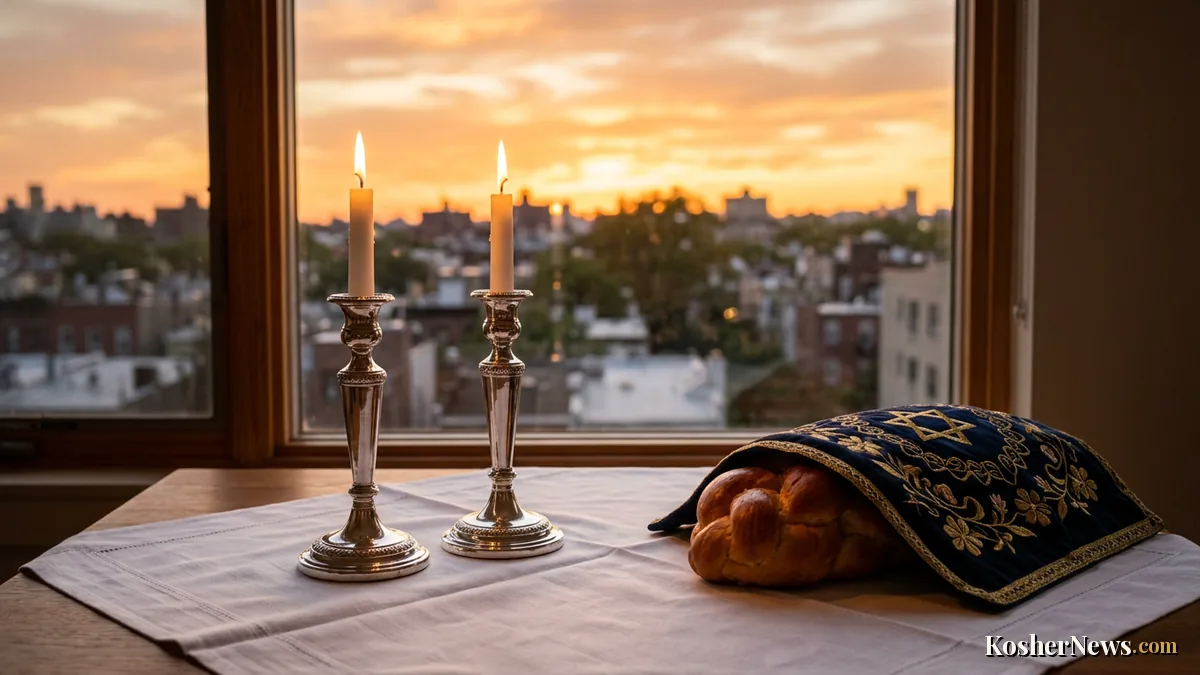
Every Friday, millions of Jewish homes around the world light candles at a set minute and end Shabbos at another set minute on Saturday night. Those times are not random. They come from the sun, from the Torah and from centuries of halachic tradition. This guide explains, step by step, how Shabbos times and daily zmanim are worked out, so the numbers on your calendar finally make sense.
The short version
- Shabbos starts at sunset on Friday. We light candles a little before sunset so we never cut it close.
- Candle-lighting time in most communities is 18 minutes before sunset. Some cities use a different number, like 40 minutes in Jerusalem.
- Shabbos ends at nightfall on Saturday, when three medium-sized stars can be seen. Havdalah is made after that.
- The times change every week because sunset moves through the year, and they are different in every city.
Find this week's times for your city on our Shabbos times and zmanim pages.
Why the Jewish day starts at night
In the story of Creation, the Torah says, "And there was evening and there was morning, one day." Because evening comes first, a Jewish day begins at nightfall and runs until the next nightfall. That is why Shabbos, Yom Tov and fast days all start the evening before. Shabbos begins on Friday evening and ends on Saturday night.
The tricky part is the time between sunset and full darkness. Halacha calls this bein hashmashos, "between the suns." We are not sure whether it belongs to the day before or the day after. To be safe, we treat it as the start of Shabbos on Friday and as still part of Shabbos on Saturday night. That simple idea explains most of the times you see.
Candle lighting: why 18 minutes before sunset?
There is a mitzvah to add a little time to Shabbos, taking on Shabbos a bit before it starts. Lighting candles before sunset also protects us from lighting too late by mistake. Over the generations, many communities settled on 18 minutes before sunset as a clear, easy rule. Most printed calendars in North America, Europe and elsewhere use 18 minutes.
Some places keep their own long-standing custom:
- Jerusalem lights 40 minutes before sunset. This old custom means Jerusalem's candle-lighting time often looks very early compared to Tel Aviv.
- Haifa and some nearby towns use 30 minutes.
- Some communities around the world use 20, 22 or 30 minutes, often because of a local rav's ruling or a tradition brought from Europe.
The candle-lighting time printed for a city is the latest time most people light. Many families light a few minutes earlier, especially with small children. Women who light candles usually accept Shabbos with the lighting itself, so cooking and other preparations should be finished first. When in doubt about your community's custom, ask your rav.
What "sunset" really means
Sunset in halacha is the moment the whole sun disappears below the horizon, the same as the sunset on a weather app. It is called shkiah. Calendars calculate it from your city's latitude, longitude and the date. Hills, tall buildings and elevation can make the sun disappear earlier where you stand, which is one reason calendars build in extra minutes.
Sunset moves a lot through the year. In New York it can be before 4:30 PM in December and after 8:30 PM in June. Cities far from the equator swing even more. In London or Manchester, Shabbos in midwinter can start before 4 PM, while in midsummer it can start after 9 PM. Daylight saving time adds another jump in spring and autumn.
When Shabbos ends: nightfall and Havdalah
Shabbos ends at tzeis hakochavim, "the coming out of the stars." The Gemara describes it as the moment three medium-sized stars can be seen. Since we cannot always see stars (clouds, city lights), calendars use the position of the sun below the horizon instead. Common methods include:
- 8.5 degrees below the horizon. Many calendars, including the numbers on KosherNews.com, use this. In New York it usually lands about 40 to 50 minutes after sunset.
- A fixed number of minutes after sunset, such as 42, 50 or 60 minutes, depending on the community.
- Rabbeinu Tam's time, 72 minutes after sunset (or a similar degree-based calculation). Many people wait until this later time before doing melacha on Saturday night.
After Shabbos ends, we say Havdalah over wine or grape juice, spices and a braided candle. Until a person has made Havdalah (or at least said "Baruch hamavdil bein kodesh l'chol"), they should not do melacha. Follow your family and community custom for which time you use.
Daily zmanim, one by one
Shabbos times are only part of the picture. Every day has its own zmanim (halachic times) for prayers and mitzvos. Most of them are based on shaos zmaniyos, "proportional hours." The daylight is divided into twelve equal parts, so a "halachic hour" is longer in summer and shorter in winter.
There are two main ways to measure the day. The Gra and Baal HaTanya count from sunrise to sunset. The Magen Avraham counts from dawn to nightfall, which makes his morning times earlier. That is why calendars often show two "latest Shema" times.
| Zman | What it means |
|---|---|
| Alos HaShachar | Dawn, when the first light appears in the east. Often calculated with the sun 16.1 degrees below the horizon. |
| Misheyakir | Enough light to tell colors apart. The earliest time for tallis and tefillin. |
| Netz (sunrise) | The ideal time to start the Shemoneh Esrei of Shacharis for those who pray "vasikin." |
| Latest Shema | The end of the third halachic hour of the day. Try to say Shema before this. |
| Latest Shacharis | The end of the fourth halachic hour, the preferred deadline for the morning Shemoneh Esrei. |
| Chatzos | Halachic midday, exactly halfway between sunrise and sunset. |
| Mincha Gedolah | Half an halachic hour after chatzos, the earliest time to daven Mincha. |
| Mincha Ketanah | Two and a half halachic hours before sunset, the preferred time for Mincha. |
| Plag HaMincha | One and a quarter halachic hours before sunset. Some communities make an early Shabbos from this time in summer. |
| Shkiah | Sunset. |
| Tzeis | Nightfall, when stars appear. Fasts end and the next day fully begins. |
Early Shabbos in the summer
When sunset is very late, some shuls daven Mincha and Maariv early and start Shabbos after Plag HaMincha. Families can then light candles and eat the Friday night meal at a reasonable hour. If you take on early Shabbos, Shabbos starts for you at that earlier time, even though the official candle-lighting time is later. Shema of Maariv should still be said again after nightfall. This is a big topic, so ask your rav how it works in your home.
Why your city's times may not match a friend's calendar
Two calendars for the same city can differ by a minute or two. Common reasons:
- One uses sea-level sunset and another adjusts for elevation.
- They pick different candle-lighting minutes (18, 20, 22, 40).
- They use different nightfall methods (8.5 degrees, 42 minutes, 50 minutes, 72 minutes).
- One rounds times down for safety, another rounds to the nearest minute.
None of this means one calendar is "wrong." It means you should pick the calendar your shul uses and stick with it.
Traveling for Shabbos
When you travel, use the times for the city where you will be on Shabbos, not your home city. Crossing time zones on a Friday flight can be confusing, so check the local candle-lighting time before you leave and set phone reminders in the local time. In far-north places in the summer, the sun may barely set. Special rules apply there, and a rav should be asked before the trip. Our kosher travel guide has more tips.
Practical tips for a calm Friday
- Check this week's candle-lighting time on Thursday night and plan backwards.
- Set two phone alarms: one hour before candle lighting and fifteen minutes before.
- Turn on your hot plate, urn and light timers well before candle lighting.
- In winter, when Shabbos starts early, cook on Thursday night.
- Leave a printed copy of the week's times on the fridge for the whole family.
Where our times come from
The zmanim on KosherNews.com are calculated by Hebcal, a well-known Jewish calendar service, for each city's exact location. Candle lighting follows the local custom Hebcal applies for that city (18 minutes before sunset in most places, 40 in Jerusalem). Havdalah is shown at nightfall with the sun 8.5 degrees below the horizon. Every community has its own customs, so always follow your shul's calendar and your rav.
See this week's times: Jerusalem, Bnei Brak, Tel Aviv, Beit Shemesh, Tzfat (Safed), Brooklyn, New York City (Manhattan), Far Rockaway & Five Towns, Lakewood, Monsey, Teaneck, Passaic and more cities.
This guide is general information to help you understand the calendar. It is not a halachic ruling. For any practical question, ask your rav.